

Imagine the moment the surgeon says you're ready to go home, yet instead of relief, you feel a sharp wave of anxiety about the trek across New York City. For many patients, the most stressful part of a procedure isn't the operating room but the journey from the hospital bed to their own front door. You probably worry about the jarring bumps of Manhattan streets or how you'll safely navigate a steep curb while recovering. It's a valid concern because standard ride-shares aren't built for clinical stability. Securing reliable post-surgery wheelchair transport is the final, essential step of your medical procedure, ensuring that your recovery isn't compromised by a bumpy or unassisted ride home.
We understand that your safety depends on more than just a vehicle with a ramp. It requires a compassionate expert who manages the logistics so you don't have to. This guide helps you navigate the transition from hospital to home with professional wheelchair transport that prioritizes your comfort and physical boundaries. We'll walk through the latest 2026 NYC transport standards, explain how to coordinate with hospital discharge teams, and show you exactly what to expect during a door-to-door assisted journey. This information will give your family the peace of mind needed to focus entirely on your healing.
Key Takeaways
- Understand why the first 24 hours post-operation are the most volatile and how specialized vehicles protect your surgical site from unnecessary physical strain.
- Learn the specific differences between standard car transfers and the "roll-in" method used in professional post-surgery wheelchair transport to ensure a pain-free journey.
- Discover how to effectively coordinate with hospital discharge planners to meet strict medical requirements and avoid common logistical delays.
- Identify the essential safety features of ADA-compliant vehicles that provide superior suspension and stability compared to traditional NYC taxis or rideshares.
- Get a practical checklist for preparing your residence and communicating mobility needs, ensuring a smooth transition from the hospital room to your own bed.
The Risks of Improper Post-Surgery Transportation
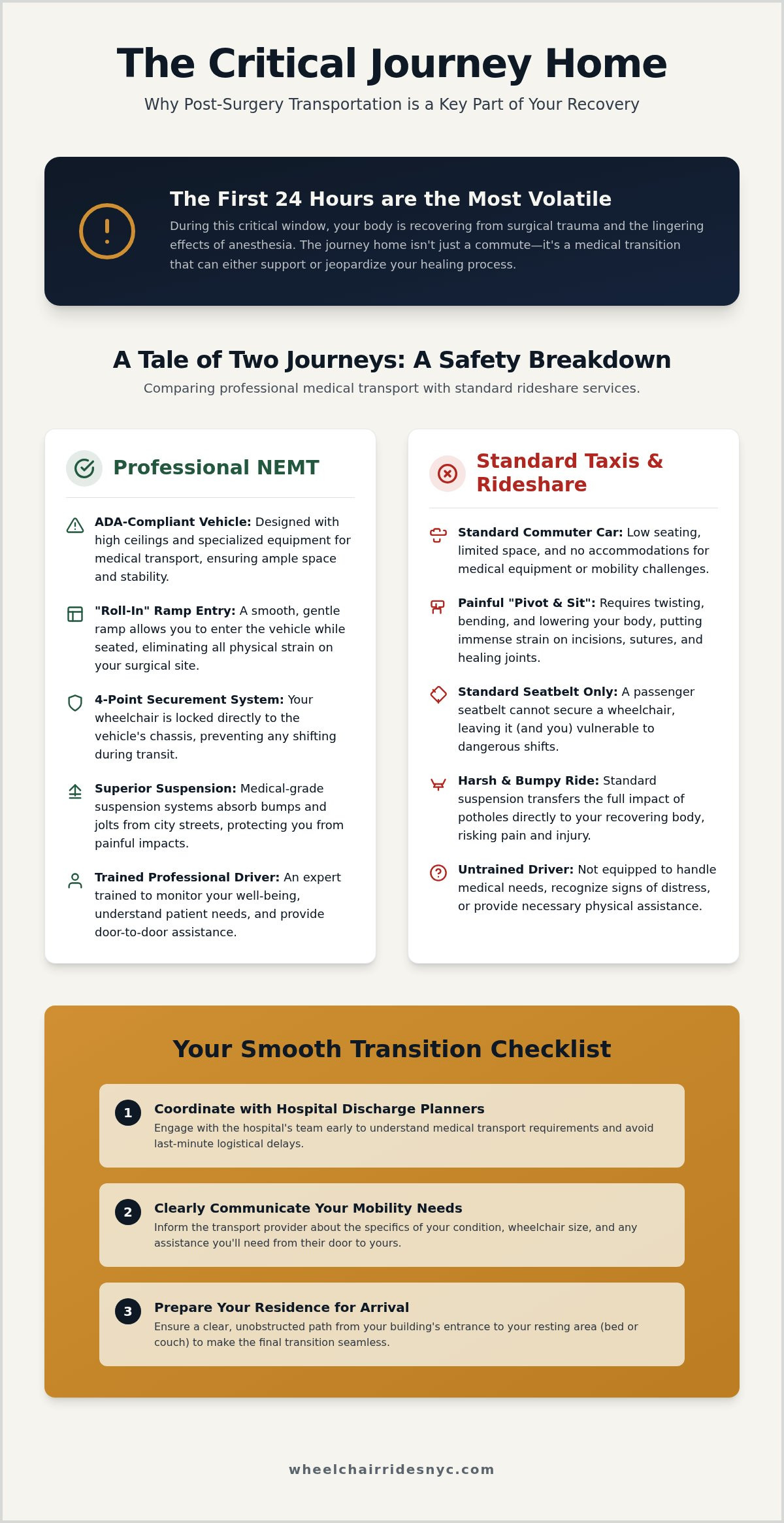
The first 24 hours after a surgical procedure represent a critical window where clinical stability is still being established. During this time, your body is working overtime to recover from the trauma of the operation. This makes the journey home much more than a simple commute. Specialized Patient transport services are designed to bridge the gap between the controlled environment of the hospital and the comfort of your home. Choosing a standard vehicle or a rideshare app during this volatile period introduces several hidden dangers that can jeopardize your recovery before it even begins.
Standard vehicles are designed for the average commuter, not for a patient with restricted mobility. Low seating requires a "pivot and sit" motion that puts immense pressure on the core and lower extremities. Additionally, the lack of medical-grade suspension in common cars means every pothole or bump on a New York City street is felt directly at the surgical site. Professional post-surgery wheelchair transport utilizes ADA-compliant vehicles with specialized suspension systems to absorb these shocks, protecting your physical stability and your surgical outcome.
Anesthesia and Cognitive Vulnerability
It's common to feel alert shortly after waking up, but anesthesia stays in your system for hours. This lingering effect can cause sudden bouts of dizziness, nausea, or confusion. A standard driver isn't trained to recognize these shifts in your status. Our drivers are trained to monitor your well-being throughout the trip. They remain attentive to your needs, ensuring that if you feel unwell, the vehicle environment is adjusted immediately for your comfort. This level of care prevents the anxiety and physical distress that often occur in an unmonitored taxi ride. It's about having a professional who understands that you aren't just a passenger; you are a patient in recovery.
Physical Strain on Surgical Incisions
For those recovering from orthopedic or abdominal surgeries, the simple act of entering a car can be hazardous. Twisting your torso to slide into a sedan seat can pull on sutures or shift internal hardware. Using post-surgery wheelchair transport eliminates this risk entirely. The "roll-in" method allows you to remain securely in your wheelchair while a ramp provides a smooth entry into the vehicle. This process ensures that your surgical site remains undisturbed. Whether you are dealing with a joint replacement or soft-tissue repair, avoiding the physical strain of traditional car entry is essential for a safe, pain-free transition to your residence.
Why Professional Wheelchair NEMT is a Medical Necessity
Professional Non-Emergency Medical Transportation (NEMT) is far more than a simple ride from point A to point B. It is a coordinated health logistics service designed to maintain the clinical stability achieved during your surgery. While a standard taxi or rideshare focuses on speed and volume, NEMT focuses on the individual's physical and emotional well-being. In 2026, NEMT is defined as a specialized health logistics framework that integrates clinical safety standards with professional mobility assistance to ensure patient stability during non-emergency transitions. This level of preparation is an integral part of AHRQ's IDEAL Discharge Planning, which highlights how a structured transition reduces the risk of post-operative complications.
One of the most critical components of this service is the anatomy of the vehicle itself. An ADA-compliant wheelchair-accessible vehicle (WAV) is engineered specifically for patients in recovery. These vehicles feature professional four-point tie-down systems that secure the wheelchair directly to the vehicle's chassis. This is vastly superior to a standard seatbelt. It prevents the wheelchair from shifting during sudden stops or turns, which protects your surgical site from jarring movements. Choosing post-surgery wheelchair transport ensures that your equipment and your body remain perfectly synchronized throughout the journey.
The Standards of ADA-Compliant Vehicles
In 2026, NYC standards for ADA-compliant vehicles require specific ramp slopes and significant interior head clearance to accommodate various wheelchair sizes comfortably. These vehicles must also provide a climate-controlled environment that is essential for patient thermoregulation. After anesthesia, your body may struggle to regulate its temperature. A professional NEMT cabin maintains a steady, comfortable heat or cool air flow to prevent shivering or overheating. This controlled environment supports your physical recovery while lowering the stress levels often associated with NYC traffic.
The Driver’s Role in Patient Stability
The person behind the wheel is a compassionate expert who understands the nuances of physical assistance. They are trained in specific protocols for senior and post-operative care, including how to handle delicate transitions. This "Bed-to-Door" philosophy means the assistance doesn't stop at the vehicle's ramp. The driver coordinates with the hospital staff and your caregiver to ensure a seamless handoff. They manage the logistics of building entrances and elevators, allowing you to remain at rest. Booking a specialized hospital discharge transportation service ensures that every detail of your post-surgery wheelchair transport is handled with the quiet authority of a seasoned professional.
Professional NEMT vs. Standard Taxis and Rideshare
The choice between a standard rideshare and professional medical transportation is ultimately a choice between a simple ride and a clinical transition. While apps provide quick pickups for healthy commuters, they lack the specialized environment needed for someone leaving the operating room. Standard vehicles require the 'pivot and sit' entry method, which forces you to twist your body and lower yourself into a deep seat. This movement can be agonizing or even dangerous for those with fresh sutures. Professional post-surgery wheelchair transport utilizes the 'roll-in' method, allowing you to stay securely in your chair while a ramp provides a smooth, level entry into the cabin.
Reliability is another major point of divergence. On-demand services rely on driver availability at that exact moment. If a driver sees a wheelchair or a patient in distress, they may cancel the trip, leaving you stranded in a hospital lobby. Professional NEMT is pre-scheduled, creating a dedicated appointment that aligns with your discharge paperwork. This reliability eliminates the stress of waiting and ensures that your trip home begins the moment you are cleared to leave. It's a commitment to your schedule that a standard taxi driver simply isn't equipped to make.
The liability gap is a hidden risk of standard transit. If a fall occurs during entry or exit in a standard taxi, the responsibility often falls into a legal gray area. Professional NEMT providers carry specific insurance and follow rigorous safety protocols to prevent such incidents. When you weigh the cost of professional transport against the potential medical expenses of a surgical complication or a fall, the value of a specialized service becomes clear. It's an investment in the success of your procedure and the safety of your immediate recovery.
Logistics and Punctuality in New York City
The 'NYC Wait Time' problem is a reality for every patient. Hospital loading zones are often chaotic and restricted. Professional drivers know the specific bay layouts for major NYC medical centers, ensuring they are exactly where they need to be. They also handle the 'Last 50 Feet.' This means assisting you from the curb, through the lobby, and into your elevator. This provides a continuous chain of care that ensures you aren't left to manage heavy doors or steep ramps on your own.
The Safety Equipment Difference
Standard cars use a three-point seatbelt designed for an upright passenger in a car seat. Medical vans use four-point securement systems to lock your wheelchair to the floor, providing total stability. These vehicles also feature suspension systems tuned to minimize road vibration, which is vital for pain management. Additionally, professional vans follow strict sanitization protocols between every trip. This protects your immune system during a time when you are most vulnerable to infection, ensuring your post-surgery wheelchair transport is as hygienic as it is safe.
Preparing for Your Discharge: A Step-by-Step Checklist
Successful recovery begins with a well-coordinated plan. You should begin speaking with your hospital discharge planner at least 48 hours before your expected departure. This lead time allows for the seamless booking of post-surgery wheelchair transport, which ensures a specialized vehicle is reserved specifically for your clinical needs. When you speak with the planner, provide precise details about your mobility level and whether you require supplemental oxygen. Sharing information about accessibility challenges at your residence, such as narrow hallways or steep entryways, allows the transport team to prepare the proper equipment in advance.
The pickup protocol is another vital detail that varies by facility. Some NYC hospitals require 'room-side' assistance where the driver meets you directly at the clinical unit, while others utilize a designated 'main entrance' discharge area. Confirming this location ahead of time prevents confusion and reduces the time you spend waiting in high-traffic areas. On the day of discharge, maintain an open communication loop between your caregiver and the transport provider. This constant contact ensures everyone is synced for the exact moment you are cleared to leave, which provides a calm and unhurried transition from the hospital bed to the vehicle.
Communicating with the Hospital Staff
Ask your nurse specific questions about your mobility restrictions for the ride home, such as whether you need to remain at a certain incline or if specific limb elevation is required. Ensure all discharge paperwork is signed and prescriptions are filled before the transport vehicle arrives to avoid keeping the driver waiting in a restricted loading zone. The discharge window is the predicted timeframe when clinical clearance is granted and the patient is physically ready to leave the facility, and providing this window to your driver helps them navigate NYC traffic for a punctual arrival. Clear communication with the medical team ensures that your post-surgery wheelchair transport aligns perfectly with your clinical status.
Home Environment Readiness
Preparing your NYC apartment is just as important as the ride itself. Clear the path from the curb to your door, ensuring the entryway is completely wheelchair-ready and free of clutter. For those in high-rise buildings, verify that the service elevator is operational to avoid unexpected delays at the finish line. Have a 'First Hour' plan ready to transition from the wheelchair into a stable home recovery chair, which minimizes physical exertion during those first fragile moments back home. If you are ready to secure your ride, you can book your hospital discharge transportation today to ensure every detail of your journey is handled by a professional.
Safe Transitions with Wheelchair Rides NYC
Wheelchair Rides NYC approaches every discharge as a vital clinical transition rather than a simple trip. We understand that the streets of New York present unique challenges that require more than just a GPS. Our drivers possess deep local knowledge of the five boroughs. This expertise allows us to navigate the complexities of hospital loading zones and narrow residential streets with ease. By choosing our specialized post-surgery wheelchair transport, you are selecting a team that prioritizes your stability from the hospital room to your residence. We provide the physical assistance needed for a safe exit, which results in a pain-free transition for the passenger. We don't just provide a vehicle. We provide a supportive experience that lowers the stress for both patients and their families.
Our role is to serve as the bridge between clinical care and home recovery. We utilize ADA-compliant vehicles that are maintained to the highest standards of safety and hygiene. This technical preparation is paired with a deep understanding of NYC hospital protocols, ensuring that your pickup is as efficient as it is comfortable. By managing the logistical details of traffic and parking, we allow you to remain at rest. This focus on clinical stability is why we are considered a leading provider of post-surgery wheelchair transport in the metropolitan area.
The Compassionate Expert at Your Service
Our commitment to dignity is at the heart of everything we do. We treat every passenger as a person with unique needs. Our team undergoes specialized training to handle the physical and emotional sensitivity required after a surgical procedure. This training includes mastering the nuances of physical assistance and respecting personal boundaries. NYC families trust us during their most vulnerable moments because we project an aura of calm, steady dependability. We act as proactive problem-solvers who ensure that no detail of your journey is overlooked. Our drivers maintain a respectful presence, which fosters a sense of security during the most fragile stages of recovery.
Booking Your Safe Ride Home
Securing your transportation is a simple and transparent process designed to fit into your discharge schedule. Whether you need a one-time ride for a hospital discharge or recurring medical transportation for follow-up therapy, our team is equipped to handle the logistics. We maintain clear communication from the moment you book until the final drop-off. This transparency ensures that caregivers are always informed about the status of their loved ones. Our goal is to provide a seamless recovery journey that allows you to focus entirely on healing. We manage the complexities of the road, which provides you with the peace of mind needed for a successful recovery. When you are ready to plan your transition, you can Schedule your safe hospital discharge with Wheelchair Rides NYC to experience the difference that professional, compassionate care makes.
Take the Final Step Toward a Successful Recovery
Your journey from the hospital bed to your own front door is the final chapter of your clinical procedure. By prioritizing specialized support, you protect your surgical site from the jarring physical strain of standard car transfers. You also benefit from a "Bed-to-Door" philosophy that ensures you aren't left to manage New York's complex building entrances alone. Our specialized post-surgery wheelchair transport provides the stability and peace of mind your family needs during this delicate transition. We combine an ADA-compliant fleet with specialized hospital discharge protocols to ensure every detail of your ride is handled with expert care.
Our compassionate, trained NYC drivers are ready to facilitate your movement with the quiet authority and empathy you deserve. We take pride in being more than just a ride; we're your partners in a safe, pain-free recovery. When you are ready to finalize your discharge plans, Secure your safe post-surgery ride home with NYC's trusted NEMT experts. You've done the hard work of surgery. Now, let us handle the logistics of getting you home safely so you can focus entirely on healing.
Frequently Asked Questions
Can I use a regular taxi for my ride home after surgery?
While you can technically hail a cab, it is generally unsafe for post-operative recovery. Standard vehicles lack the specialized suspension and four-point securement systems found in professional medical vans. These features protect your surgical site from the jarring movements and potholes common on NYC streets. Professional transport allows you to remain in your wheelchair, avoiding the painful twisting motions required to enter a standard car seat.
How far in advance should I book post-surgery wheelchair transport in NYC?
Booking your transport 48 to 72 hours before your expected discharge is the best practice. This window allows our team to review hospital protocols and secure a vehicle that meets your specific mobility requirements. Early scheduling reduces last-minute stress for both the patient and the family. It also ensures that a driver is dedicated to your post-surgery wheelchair transport during the busy NYC peak hours.
Do I need to provide my own wheelchair for the transport?
You typically use your own wheelchair or one provided by the hospital during the discharge process. If you do not have your own equipment, please inform the coordinator at the time of booking. This ensures the transport team is prepared to assist you with the proper equipment for your journey home. Our vehicles are designed to accommodate a wide variety of manual and motorized wheelchair models safely.
What happens if my hospital discharge is delayed?
Discharge delays are a common part of the clinical process. We maintain a flexible communication loop with caregivers to monitor your status throughout the day. If your medical team requires more time for paperwork or final observations, we adjust our dispatch schedule. Our goal is to ensure your driver arrives exactly when you are physically and administratively ready to leave the facility.
Can a family member or caregiver ride with me in the van?
Accommodating a companion is a standard part of our service. Our ADA-compliant vehicles feature dedicated seating for at least one caregiver or family member to ride alongside you. This presence often lowers the patient's anxiety and ensures a supportive environment during the transition. Having a familiar face during the ride provides an extra layer of comfort and help once you arrive at your residence.
Is professional wheelchair transport covered by insurance in New York?
Insurance coverage for NEMT in New York depends entirely on your specific policy and provider. Medicaid recipients usually have access to these services through state brokers like Medical Answering Services (MAS). For private insurance or Medicare, you should contact your member services department directly. They can verify if your plan includes transportation benefits or if you are eligible for reimbursement for medical travel.
Will the driver help me get into my apartment building?
Our drivers provide comprehensive assistance that extends well beyond the vehicle ramp. They help navigate NYC apartment lobbies, service elevators, and doorways to ensure you are safely inside your home. This level of care is essential for maintaining stability during the final stage of your trip. We take pride in handling the difficult logistics of the "last 50 feet" so you don't have to.
What information do I need to provide when booking a post-op ride?
You should have the hospital unit number, the patient's mobility level, and any specific equipment needs ready. Providing details about your home's accessibility, such as whether there is a working elevator or a ramp, helps the driver plan for a safe arrival. Clear information is the key to a seamless post-surgery wheelchair transport experience that prioritizes your clinical stability and personal comfort.

